
Deadly Gila monster venom: GLP-1 origins

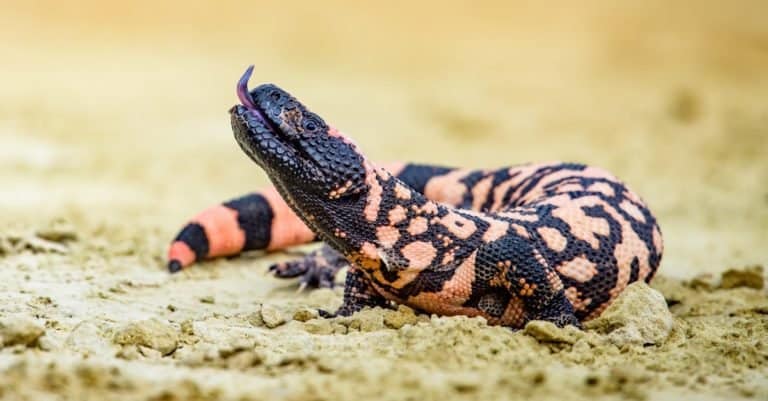
How a chunky desert reptile shaped Ozempic
The most consequential class of drugs of the past decade (e.g., Ozempic, Wegovy, Mounjaro, Zepbound) owes its existence to a venomous desert lizard. The Gila monster, native to the southwestern United States and northwestern Mexico, is a slow-moving reptile capable of going months without food while maintaining stable glucose levels. That biological oddity turned it into the unlikely starting point for a drug revolution.
The discovery
In the early 1990s, endocrinologist Dr. John Eng at the Bronx VA Medical Center became curious about the Gila monster's metabolism. He ordered dried venom samples from a Utah serpentarium and began analyzing them with Dr. Jean-Pierre Raufman. The team isolated a peptide they named exendin-4. It was about 50% identical to GLP-1, a human gut hormone that stimulates insulin production when blood sugar is elevated. But there was a critical difference: human GLP-1 breaks down in the body within minutes, while exendin-4 lingers for hours. That durability shaped every GLP-1 drug that followed.
The slow road to approval
The VA initially declined to patent the discovery. For three years, Eng struggled to interest pharmaceutical companies in a diabetes drug derived from lizard saliva. Most dismissed it as far-fetched. In 1996, Amylin Pharmaceuticals licensed the patent and began development. The result was exenatide, marketed as Byetta, which received FDA approval in April 2005, nearly 13 years after Eng's initial discovery. While it had limitations (e.g., twice-daily injections and nausea), it proved the concept and laid critical groundwork.
The drugs that followed
Every GLP-1 receptor agonist thereafter — liraglutide (2010), dulaglutide (2014), semaglutide (2017), and tirzepatide (2022) — built on the same fundamental insight. Today, semaglutide is sold as Ozempic and Wegovy, and tirzepatide as Mounjaro and Zepbound. Experts project that nearly 10% of Americans could be using GLP-1 medications by 2030. The drugs do more than control diabetes; they drive significant weight loss, reduce cardiovascular events, and show early promise for conditions like Alzheimer's disease and addiction.
The legacy
The Gila monster provided the template for how a longer-lasting GLP-1 analog could become a viable therapy. Every step from venom gland to pharmacy shelf depended on rigorous science: isolating the right peptide, identifying its sequence, confirming its structure, and verifying that synthetic versions matched the original.
That last part hasn't changed. Modern GLP-1 compounds are synthetic peptides manufactured at scale, and every batch traces back to the same fundamental question:
Is this molecule actually what we think it is?
That answer, batch after batch, is what makes a peptide more than a chemical curiosity.
Related Articles
Get Your Peptides Analyzed
Fixed pricing. Fast turnaround. Verified results with cryptographic proof.